It’s easy to confuse the terms trimming and pruning. After all, most homeowners use the words interchangeably without giving them a second thought. But while both involve cutting away branches on a tree, these solutions serve distinct purposes.
Tree trimming, for example, is largely focused on aesthetics and shaping, while tree pruning is primarily about the health and longevity of your tree. It involves removing branches to prevent decay, hazards, and wind sail issues.
Since understanding the difference between tree trimming vs. pruning can lead to healthier landscapes, we’ve broken down each of these tree care solutions so you can make informed decisions for the beautiful, woody plants on your property.
What Is Tree Pruning?
When people decide to grow out their hair, they are told to stay on top of their hair cutting appointments, and while it may seem counterintuitive at first, this actually helps the hair grow more healthily. In the same fashion, cutting away damaged or compromised branches during pruning can improve the tree’s structure and health.
Because this is the major difference between tree pruning vs. trimming, it bears repeating: The goal of pruning is not to clean things up — it’s to protect the tree from future damage.
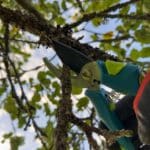
When performed by certified arborists, pruning encourages the growth of strong, healthy limbs, as diseased, infested, and dead limbs are identified and removed. Pruning also helps prevent issues related to overcrowding. Without branches growing too close together, restricting airflow and sunlight, the canopy is able to breathe and fight off pests and fungi.
The Benefits of Tree Pruning
We’ve touched on it a bit already, but we want to take a closer look at the benefits of tree pruning.
Disease Prevention
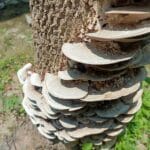
One of the most important reasons to prune a tree is to prevent disease. Trees, like any other living organism, can fall prey to infections, fungi, and infestations, and dead or decaying branches often serve as the entry point for these issues. When neglected, the disease can spread to the entire tree. That’s why we recommend removing affected branches early; it stops disease from progressing and infecting the rest of the canopy.
Improved Safety
Weak or dead tree branches can fall without warning, especially during storms or high winds. By having a certified arborist remove these hazards, you proactively help to keep your property, family, and pets safe. For commercial properties, regular pruning can even help minimize liability.
Greater Flower & Fruit Production
If you have a flowering or fruit-bearing tree, thoughtful pruning can improve yield and enhance the beauty of your landscape. And because pruning stimulates new growth, it allows trees to develop a balanced shape that supports better health and longevity.
What Is Tree Trimming?
While pruning targets the tree’s health, trimming is typically focused solely on enhancing the plant’s appearance.
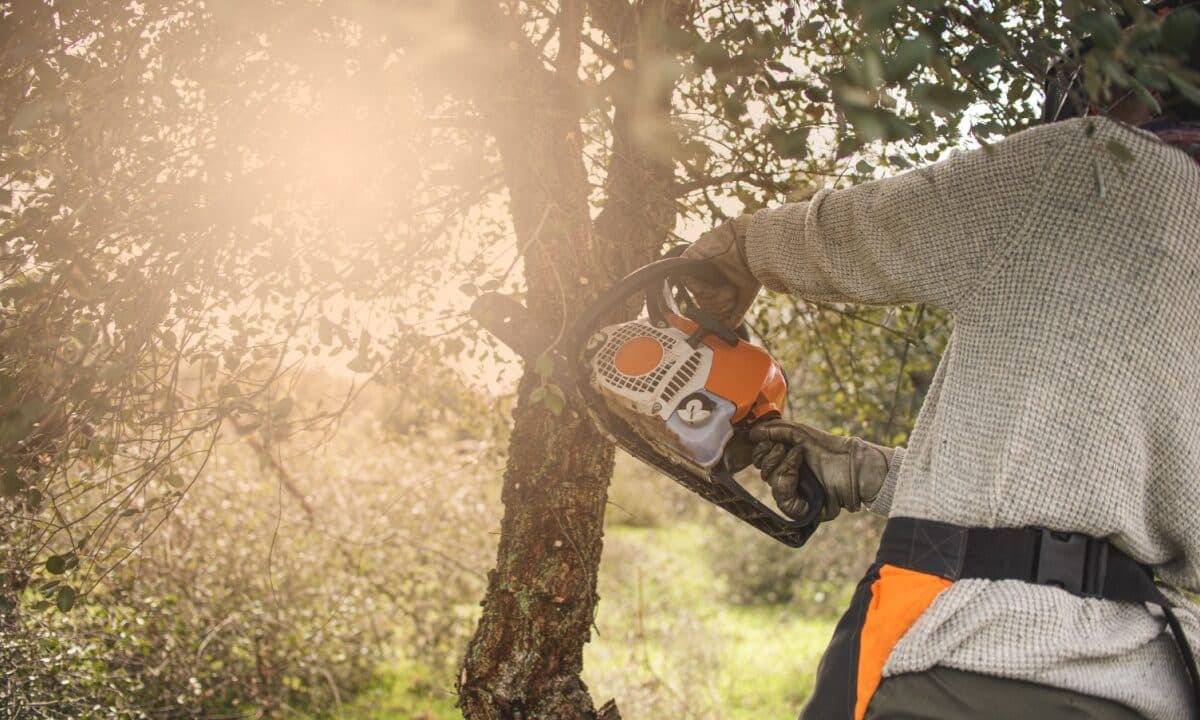
When routine care is neglected, branches can become unruly over time and even obscure views. Homeowners are then left scrambling, looking for a way to “tidy up” their trees. They often come across companies offering tree trimming services, and these “experts” begin cutting branches with pruning shears in all the wrong places or removing too much of the canopy, shocking the tree and inhibiting growth. That’s why it’s so important to work with plant health care professionals who have been certified by the International Society of Arboriculture (ISA). These arborists understand the fine line between helpful pruning and harmful overcutting.
The Risks of Tree Trimming
When trimming is prioritized over a tree’s biological health (or when pruning is performed by someone without the knowledge of where to cut, how to cut, and when to cut), the consequences can be devastating. More specifically, you may want to avoid choosing tree trimming over pruning to avoid these issues:
- Tree Stress and Starvation: Every leaf removed is a hit to the tree’s energy source. Aggressive trimming, such as tree topping, can shock a tree into a state of starvation, forcing it to deplete its energy reserves just to survive.
- Weak Regrowth: When a tree is over-trimmed, it often responds by producing water sprouts — rapidly growing, flimsy shoots. These are structurally weak and far more prone to breaking during South Carolina’s high-wind events.
- Decay and Infestation: Improper cuts, such as flush cuts that are too close to the trunk, prevent the tree from naturally sealing its wounds. This leaves the interior wood exposed to wood-boring insects, fungi, and rot.
- Sunscald: Removing too much of the canopy too quickly exposes the sensitive inner bark to direct sunlight. Much like a human sunburn, this sunscald can damage the tree’s vascular system, leading to bark splitting and permanent damage.
Protect Your Tree’s Health & Beauty With Tree Pruning From TreeWiseMen
As you can see, tree trimming is often performed by individuals who lack proper training or understanding of tree biology. While their intentions may be good, the result is frequently a tree that’s been overcut, poorly shaped, or left vulnerable to stress and disease. So, when you’re trying to decide between tree trimming vs. pruning, know that pruning is the more thoughtful, strategic approach to tree care.
At TreeWiseMen, we offer tree pruning services in Bluffton and Beaufort County, SC, because we believe in getting to the heart of what your tree needs to grow stronger and live longer. We take great care to assess each tree individually, targeting diseased or poorly positioned limbs to improve airflow and light penetration and preserve the tree’s natural form.
If you want your trees and shrubs to be more than decorative features — if you want them to be strong and stunning for years to come — get in touch with our ISA-certified arborists. We’ll guide you toward the right service.
Quick Answers to Your Tree Trimming vs. Tree Pruning Questions
What’s the main difference between tree trimming and tree pruning?
Tree trimming is considered a cosmetic service, where shaping the canopy is a priority. Tree pruning, however, is more strategic and health-focused. It targets dead, diseased, damaged, or poorly positioned limbs to reduce stress on the tree, improve structure, and help prevent decay, pests, and long-term hazards.
Can “tree trimming” hurt a tree?
Yes! Tree trimming is really improper pruning. And removing too much of the canopy at once, cutting branches in the wrong place, or topping a tree can shock it, slow healthy growth, and trigger weak regrowth that’s more likely to break later. Improper cuts can also create wounds that don’t seal properly, leaving the tree vulnerable to insects, fungal growth, and internal decay.
What are examples of bad pruning practices I should avoid?
A few common ones include topping (cutting the canopy back severely), flush cuts (removing the branch collar), and over-thinning (taking out too much interior growth). These practices can stress the tree, encourage weak regrowth, and increase the chances of decay and disease, even if the tree looks “neater” right after the work is done.
How do I know when my tree needs pruning?
If you’re seeing dead limbs, rubbing branches, signs of disease, storm damage, or heavy growth that’s becoming unbalanced, you likely need tree pruning services.
Why should I hire an ISA-certified arborist for pruning?
ISA-certified arborists understand where to cut, how much to remove, and how to preserve the tree’s natural form while improving structure and health. The result is a tree that doesn’t just look better in the short term; it also grows stronger and lives longer.