Scale Insect Control & Treatment in Bluffton, SC
You carefully selected every crape myrtle, live oak, and camellia in your landscape to create a personal sanctuary where the vibrant greenery reflects the natural beauty of the Lowcountry. Unfortunately, beneath their healthy-looking leaves and branches, there could be destructive pests like scale insects taking hold.
Over time, these tiny invaders weaken plants, diminish curb appeal, and threaten the long-term health of your trees and shrubs. That’s why professional scale insect control and treatment in Bluffton, SC, is essential. Our certified arborists specialize in identifying, managing, and eliminating scale infestations while protecting the overall health of your property.
If you’re concerned about declining trees or shrubs, our team is ready to help determine if scale insects are to blame and restore health. Contact us today to schedule an inspection!
What Are Scale Insects, and Why Are They a Threat to Your Trees?
Scale insects are small, sap-feeding pests that attach themselves to trees, shrubs, and ornamental plants. Unlike many insects, scale pests often go unnoticed because they resemble bumps, shells, or waxy growths on stems and leaves. Once attached, they feed continuously, draining vital nutrients from the plant and slowly compromising its health.
As scale insects feed, they excrete a sticky substance known as honeydew, which coats leaves and surfaces below. This residue encourages the growth of black sooty mold, further reducing a plant’s ability to photosynthesize.
Left untreated, scale insects weaken trees and shrubs over time. Branches may begin to die back, leaves may yellow or drop prematurely, and the plant becomes more vulnerable to disease, drought stress, and secondary pest infestations. For this reason, early detection and professional scale insect treatment are critical to stopping damage before it becomes irreversible.
Key Signs Your Trees Have Scale Insects
Because scale insects often blend into bark and foliage, infestations can be difficult to spot. However, there are several warning signs that may indicate a scale problem on one or more of your trees and shrubs. These signs include:
- Sticky residue on leaves or branches
- Black sooty mold growing on foliage
- Yellowing or curling leaves
- Premature leaf drop
- Stunted growth or thinning canopy
- Small, shell-like bumps along stems or leaf undersides
- Branch dieback or declining plant vigor
If you notice any of these scale insect symptoms, it’s important to act quickly. The sooner the pests are addressed, the better the outcome for your trees and shrubs.
Determining the Type of Scale Affecting Your Plant
“Scale” is a broad term covering thousands of species, each with different life cycles, feeding habits, and vulnerabilities. That’s why our ISA-certified arborists always start with performing a thorough inspection to determine exactly which type of scale is attacking your trees and shrubs.
Read More
Identifying Soft Scales
Soft scales are generally larger and more convex in shape, often looking like small turtles or bumps on the stems and leaves of a tree or shrub. They typically feed in the phloem of the tree, which is the food pipeline transporting sugars produced by photosynthesis. Because they ingest large amounts of sugary sap, they excrete the excess as honeydew. This sticky mess is the hallmark of a soft scale infestation.
When we inspect your property, we look for these tell-tale rounded shapes and the associated sooty mold. Soft scales are usually easier to treat with systemic options because their feeding mechanism draws in chemicals circulating through the tree’s vascular system efficiently. However, timing is everything; catching them during their crawler stage (when the newly hatched nymphs are mobile and vulnerable) is often the most effective strategy for immediate knockdown.
Identifying Armored Scales
Armored scales are more insidious and harder to control. Unlike their soft cousins, armored scales live beneath a hard, waxy covering that is not attached to their bodies. This shield protects them from predators and contact insecticides. They are also typically smaller, flatter, and can be difficult to distinguish from the bark itself.
Unlike soft scales, armored scales feed on individual plant cells, bursting them to suck out the contents. This means they do not produce honeydew, so you won’t see the sticky residue or sooty mold associated with soft scales. Instead, the primary sign is branch dieback and a general decline in the tree’s health. Our team at TreeWiseMen is trained to spot these subtle differences, ensuring we prescribe a treatment plan that actually penetrates their defenses.
Our Professional Scale Insect Control & Treatment Services in Bluffton, SC
Once we have identified the specific pest and assessed the severity of the infestation, our ISA-certified arborists create a customized scale insect treatment plan. This may include foliar sprays or soil injections.
Foliar Applications
For many infestations, especially those caught during the active crawler stage, foliar sprays are effective. This method involves spraying a specialized insecticide or horticultural oil directly onto the leaves and branches of the affected tree.
Our equipment allows us to reach the upper canopy of your larger shade trees, ensuring that no part of the tree is left unprotected. We also meticulously time these applications to align with the life cycle of the specific scale species in your yard, striking when they are weakest.
Systemic Soil Injections
When dealing with tall trees, dense canopies, or heavy infestations where spray coverage is difficult, systemic soil injections are often the superior choice. This advanced treatment method involves injecting a specialized formulation directly into the soil at the base of the tree. The tree’s root system absorbs the treatment and transports it upward through the trunk and into the branches and leaves. As the scale insects feed on the sap or plant tissue, they ingest the treatment and die.
Systemic injections are particularly valuable because they provide long-lasting protection, often continuing to work for an entire growing season. They also minimize the risk of drift affecting neighboring plants or beneficial insects that land on the tree but don’t feed on it.
Why Choose TreeWiseMen for Scale Insect Control in Bluffton, SC
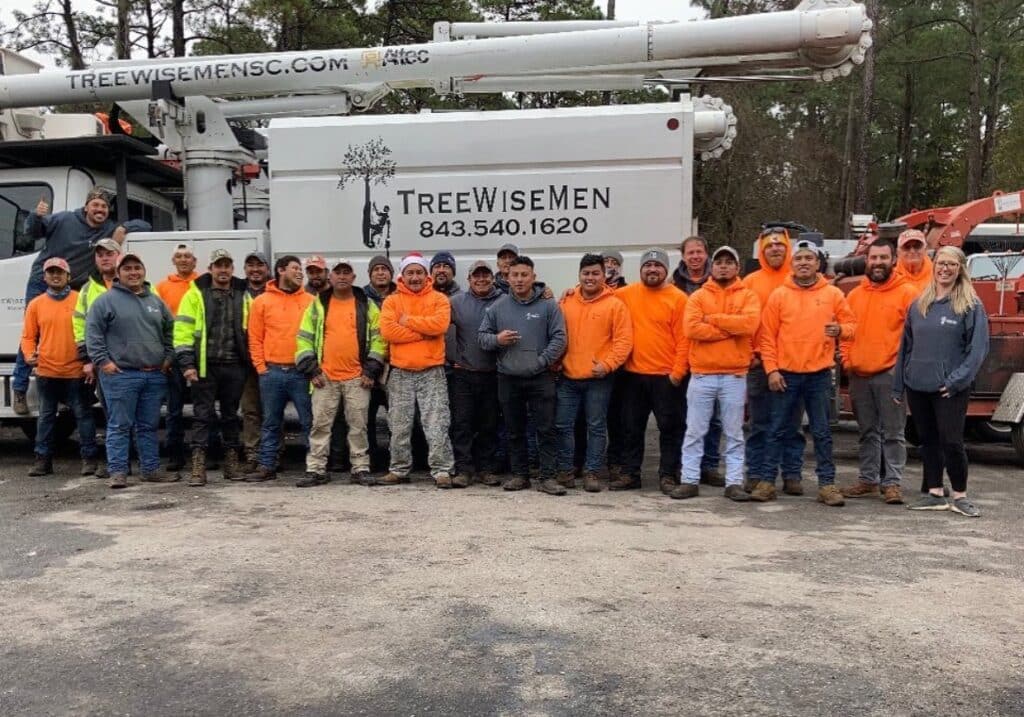
When it comes to protecting your trees and shrubs, experience matters. TreeWiseMen is trusted throughout Bluffton and the surrounding Lowcountry for professional, science-based tree care services. Our team understands the unique challenges posed by coastal South Carolina’s climate and how local tree species respond to pests like scale insects.
We pride ourselves on delivering honest recommendations, thorough evaluations, and reliable service. Our arborists stay up to date with industry standards and best practices to make sure every treatment plan is designed with the long-term health of your landscape in mind. Whether you’re managing a residential yard or commercial property, you can count on TreeWiseMen to provide solutions that protect your investment.
Call Today for Expert Scale Insect Treatment in Bluffton & Beaufort County
Scale insects may be small, but the damage they cause can be significant if left untreated. Fortunately, with professional scale insect control and treatment in Bluffton, SC, your trees and shrubs can recover and thrive once again.
Our knowledgeable team is ready to assess your trees, develop an effective treatment plan, and help you maintain a healthy, pest-resistant landscape. Contact TreeWiseMen today and take the first step toward stronger, healthier trees and shrubs.


