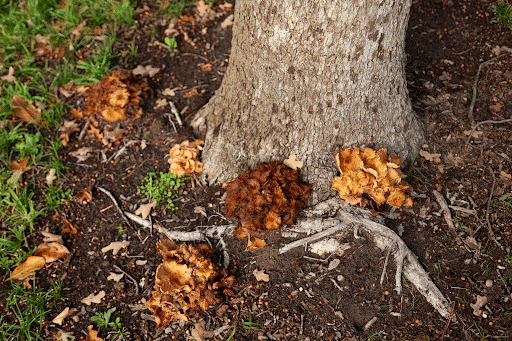
After several days of steady rain, you step outside to check on your yard and notice something unusual around one of your trees — a cluster of mushrooms sprouting near the trunk. At first glance, it might not seem like a big deal. Mushrooms often appear in lawns after wet weather, and many homeowners assume they’re harmless. But when fungi begin growing around the base of a tree, it can sometimes signal a much larger problem hidden beneath the soil.
In some cases, mushrooms growing near the trunk is one of the earliest visible warning signs of root rot. Left untreated, root decay can compromise the tree’s structure, increase the risk of falling limbs, and even lead to total tree failure during storms or high winds.
So, before you dismiss the appearance of mushrooms at the base of your beloved tree, take a closer look at what fungal growth could mean and the other signs that indicate a tree has root rot.
What Do Mushrooms Growing Around a Tree Mean?
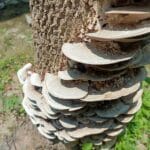
Mushrooms are fungi, and fungi thrive on decaying organic material. So, when mushrooms begin growing around the base of a tree, they’re often feeding on dead or decomposing wood underground.
By the time fungi become visible, the internal damage may already be extensive. That’s why it’s important not to ignore persistent mushroom growth near your trees.
Other Common Signs of Rotted Tree Roots
Mushrooms aren’t the only indication that a tree may have root problems. Since roots are responsible for supporting the tree and supplying water and nutrients, root decay often affects the entire structure and appearance of the tree. Here are a few red flags that your tree’s foundation is in trouble:
- A Thinning Canopy: Roots are responsible for taking up water and nutrients. When they rot, the canopy of the tree starves. You might notice smaller leaves, yellowing foliage (chlorosis), or a canopy that looks sparse compared to previous years.
- Dead or Falling Branches: Branches that die unexpectedly may point to underground root damage.
- A Sudden Lean: If a tree suddenly begins leaning or appears less stable than before, root rot may be weakening its foundation.
- Cracked or Raised Soil Around the Base: As roots decay and weaken, the soil around the trunk may shift or crack. You may also notice heaving soil or exposed roots near the base of the tree.
- Soft, Brittle, or Hollow Wood: As fungi break down decaying wood inside the tree, portions of the trunk or roots may become soft, brittle, or entirely hollow.
Why Root Rot Is Dangerous for Trees
As you can likely guess from the signs of root rot, this disease is more than just a cosmetic issue. It directly impacts the safety and stability of a tree. After all, the roots provide both structural support and access to nutrients and water, so a compromised root system can quickly turn a healthy-looking tree into a hazard.
One of the biggest concerns with root rot is the increased risk of tree failure. Even if the trunk and canopy still appear relatively healthy, decayed roots may no longer be strong enough to support the tree during storms, heavy rain, or high winds. And falling branches or uprooted trees can threaten homes, vehicles, sidewalks, fences, and nearby power lines. That’s why early detection and professional evaluation are so important.
What Causes Tree Root Rot?
Several environmental and physical factors can contribute to root rot in trees. Common causes include:
- Overwatering & Poor Drainage: Fungi thrive in soggy, anaerobic (oxygen-poor) conditions. If your soil stays saturated, the roots essentially drown, die, and then become food for fungi.
- Compacted Soil: Heavy foot traffic or vehicle use near a tree packs the soil tight, stripping it of the oxygen roots need to survive.
- Construction Damage: Excavation, trenching, or landscaping work near trees can damage roots and create entry points for fungi.
- Improper Planting Practices: Trees planted too deeply or in unsuitable soil conditions may struggle to establish healthy root systems, making them more susceptible to decay later on.
- Poor Mulching Habits: Mulch volcanoes (piling mulch high against the trunk) trap moisture against the bark, inviting fungal infections to start at the base of the tree.
Can a Tree With Root Rot Be Saved?
Whether or not a tree can recover from root rot depends on how advanced the decay has become. In some cases, early intervention can slow the progression of the disease and improve the tree’s overall health.
A certified arborist can assess the extent of the root damage and evaluate the tree’s structural stability to determine the best course of action. If the damage is still limited, they may recommend:
- Aerating compacted soil
- Improving soil drainage
- Reducing excess watering
- Applying mulch properly
- Managing fungal infections with trunk and soil injections when possible
- Pruning dead or weakened branches
Unfortunately, if root rot has severely weakened the tree or created a high risk of failure, removal may be the safest solution. Dead or unstable trees can become extremely dangerous if left standing.
Prevent Root Rot & Keep Your Trees Healthy
The best way to protect your trees from root rot is through proactive care and regular monitoring. Healthy trees are far more resistant to disease, decay, and environmental stress, and proper watering, soil management, mulching, pruning, and routine inspections all play a major role in maintaining strong root systems.
At TreeWiseMen, we help homeowners care for their trees so the chances of root rot and other serious problems are minimized. Our ISA-certified arborists understand how to identify early warning signs of decay and provide professional recommendations to keep your favorite plants as healthy as possible.
If you’re concerned that one of your trees may already be affected by root rot, don’t wait for the problem to worsen. Our team can inspect your trees, evaluate the extent of the damage, and recommend the safest and most effective solution for your property.
Contact TreeWiseMen today to learn more about our professional plant health care services and schedule an inspection with our experienced arborists.