Seeing a tree leaning in your yard can be alarming, and many homeowners immediately worry that the tree is going to fall and cause damage to their home, vehicles, or neighboring properties. In coastal areas like Bluffton, SC, where heavy winds and saturated soil are common, that concern is completely understandable.
Of course, it’s helpful to understand that some trees naturally grow with a slight lean and remain perfectly stable for decades. In other cases, trees develop a sudden or worsening lean, which can signal serious structural issues, root damage, or soil instability.
To help you protect your property, we break down what causes trees to lean, what you can do about it, and how to know when it’s time to call a certified arborist.
Common Reasons a Tree Starts Leaning
A tree rarely begins leaning without a reason. Identifying the cause is the first step toward determining whether it can be corrected or if removal may be necessary.
Competition for Sunlight
Trees growing in crowded environments may lean as they stretch toward sunlight. In many cases, this type of lean is gradual and natural. However, if the lean increases suddenly, there may be additional structural issues involved.
Storm Damage
Strong winds from coastal storms and hurricanes are one of the most common reasons trees begin to lean. Wind puts immense pressure on a tree’s canopy, essentially acting like a sail. If the root system isn’t strong enough to anchor the tree securely, the wind can shift the entire root plate.
Sometimes, the tree snaps immediately. Other times, it partially uproots and begins leaning gradually. Even if the tree doesn’t fall during the storm, structural damage may already be present.
Saturated Soil
After prolonged rainfall, soil becomes heavy and unstable. In Bluffton’s Lowcountry conditions, sandy and clay-based soils can become particularly loose when oversaturated. When the ground loses its firmness, it can no longer support the tree’s root system effectively. And if the soil shifts or erodes around the roots, the tree may tilt, even without strong winds.
Root Plate Failure
The root plate is the mass of roots that anchors the tree to the ground. When this system fails due to decay, compaction, or poor soil conditions, the tree’s stability is compromised.
Root plate failure is serious. In many cases, once a mature tree’s root system has significantly failed, the tree cannot be safely restored to its original upright position. In these instances, tree removal is the smarter route.
Improper Planting
Young trees that were planted too shallow, too deep, or without proper root preparation are more likely to develop instability. If the root ball wasn’t properly spread or if the soil wasn’t compacted correctly during installation, the tree may struggle to establish strong anchoring roots. Over time, this can result in a noticeable lean.
Pests and Disease
Insects and fungal diseases can weaken both the trunk and root system. Termites, borers, root rot fungi, and other pathogens may hollow out or decay internal wood structures. From the outside, the tree may look healthy, but internally, it may lack the strength to support itself. When structural integrity is compromised, leaning often follows.
How to Tell if a Leaning Tree Is Dangerous
As we mentioned, not every leaning tree is dangerous. However, there are warning signs to watch for that could indicate the situation may be hazardous. Call our tree care company right away if you notice any of the following problems:
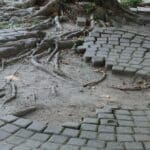
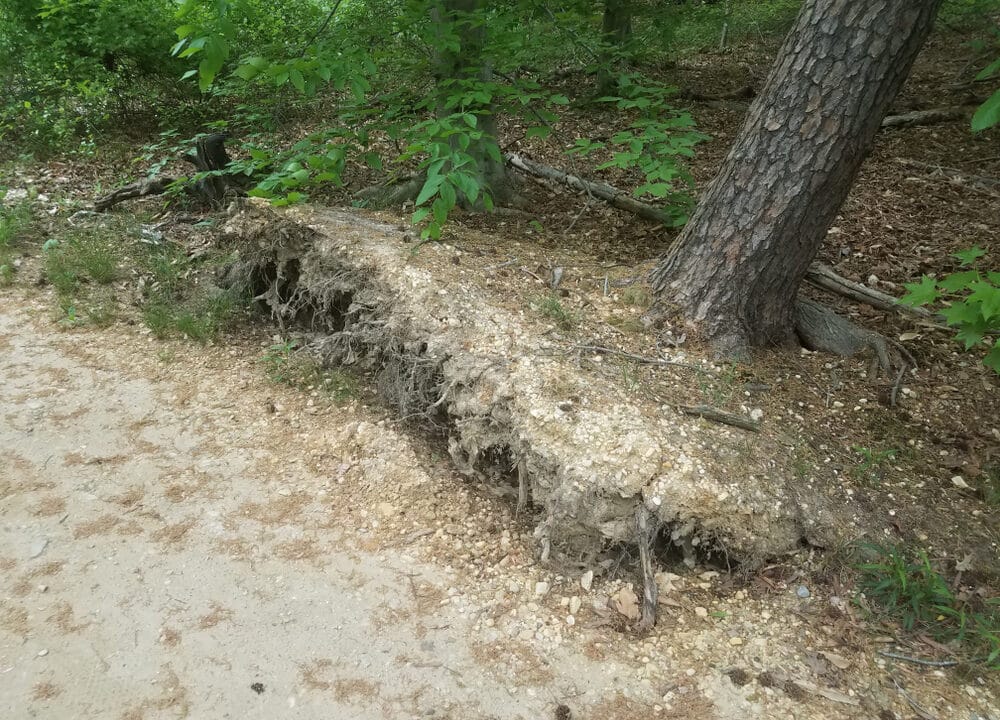
- Exposed or Lifted Roots: If you see roots lifting out of the soil on one side of the tree, that’s a major red flag. Uplifted roots suggest the root plate has shifted and may no longer be providing adequate support.
- Cracked or Heaving Soil: Cracks forming in the soil around the tree’s base indicate ground movement. Soil separation often accompanies root plate failure and can mean the tree is actively shifting.
- Trunk Cracks or Splits: Vertical cracks in the trunk, splitting bark, or visible cavities can signal structural weakness. If the trunk has fractured internally, the tree may not be capable of safely supporting its canopy weight.
- New or Sudden Movement: If the tree wasn’t leaning before and now is — or if the lean has noticeably worsened in a short period — this should never be ignored. Sudden movement is often associated with soil failure or root damage.
- Canopy Imbalance: An uneven canopy increases leverage forces during wind events. If most of the foliage sits on the leaning side, the tree is more likely to continue tipping.
Can You Straighten a Leaning Tree?
This is one of the most common questions homeowners ask when they have a leaning tree, and the answer depends on the tree’s age, size, and extent of root damage.
When it is possible to stabilize a leaning tree, a certified arborist may recommend:
Tree Cabling and Bracing
Tree cables and braces provide supplemental structural support. Installed high in the canopy or within the trunk, these systems reduce stress and limit movement during wind events.
This solution is often used for trees with structural weaknesses or split leaders.
Corrective Tree Pruning
Strategic pruning can reduce canopy weight and rebalance the tree. Removing excess weight from the leaning side also decreases leverage and wind resistance.
Root Zone Care
Improving soil conditions can strengthen root development. Techniques may include soil aeration, mulching, proper irrigation adjustments, and fertilization to encourage root recovery.
Tree Removal as a Last Resort
If the root system has failed significantly or the tree presents a clear hazard to structures or people, removal may be the safest solution. While no homeowner wants to lose a mature tree, safety must always come first. A professional evaluation helps you make the right decision based on facts, not fear.
What NOT to Do With a Leaning Tree
When a tree starts leaning, it’s natural to want to fix it immediately. Unfortunately, well-intentioned DIY efforts often make the problem worse. Make sure you stay away from these common mistakes:
- Improper Staking: Staking is rarely effective for mature trees, and overly tight ties or leaving stakes in place too long on new trees can weaken trunk development and create dependency.
- Digging Around the Roots: Attempting to dig around exposed roots or “reset” the tree yourself can further damage the root system.
- Cutting Too Much Off the Top: Topping or drastically reducing the canopy in hopes of making the tree lighter is extremely harmful. This practice weakens the tree, increases the risk of decay, and often leads to rapid regrowth that is structurally unsound.
- Waiting Too Long: Perhaps the biggest mistake is ignoring the issue. A leaning tree rarely corrects itself. Over time, root damage can worsen, especially in coastal Lowcountry conditions where storms and soft soil increase risk. Delaying evaluation can turn a manageable situation into an emergency removal.
Ask TreeWiseMen for Help With a Leaning Tree
TreeWiseMen makes it easy to get answers to leaning trees and take the safest next step. Our team includes ISA-certified arborists who are trained to evaluate structural stability, root health, and long-term risk. We are also licensed and insured, and we follow industry best practices to protect your property and preserve healthy trees whenever possible.
Whether your tree needs professional stabilization, corrective pruning, or safe tree removal, we’ll provide honest guidance tailored to your property. Get in touch with our team today, and let us provide peace of mind about your tree’s condition.